
January Market Recap: A Strong Start to the Year Despite Volatility
If you read the headlines in January, you might have felt like markets were on edge.
Geopolitical tension. Federal Reserve uncertainty. A government shutdown. Sharp moves in gold and silver. Severe winter storms.
And yet, despite all of that, major stock indices reached new all time highs.
This is exactly why we do not build your financial life around headlines.
We build it around long term strategy.
What Actually Happened in January
Let’s zoom out.
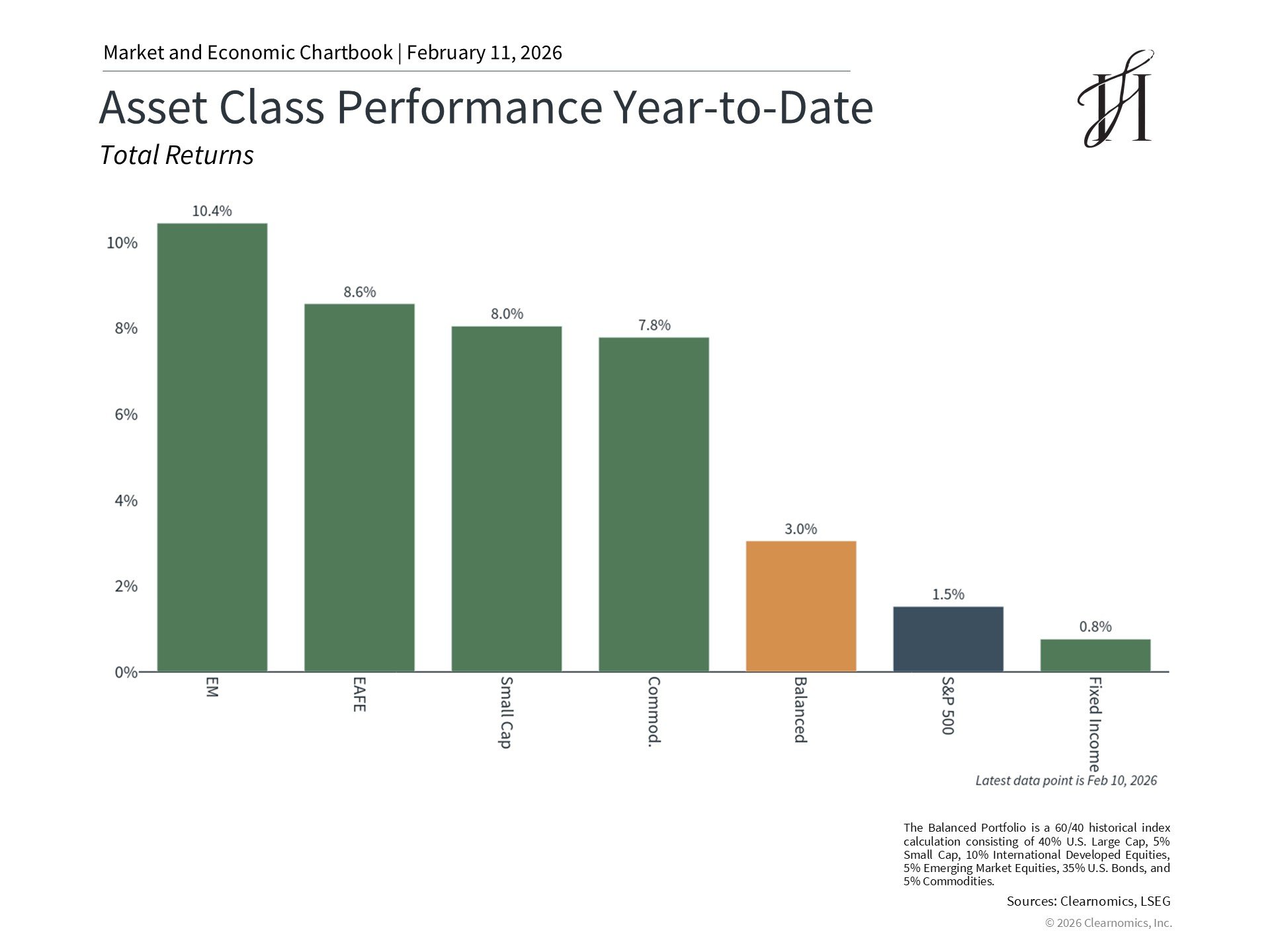
The S&P 500 gained 1.4% and briefly crossed 7,000 for the first time ever on an intra day basis.
The Nasdaq rose 0.9% and the Dow gained 1.7%.
Bonds were modestly positive, with the Bloomberg U.S. Aggregate Bond Index up 0.1%, even as the 10 year Treasury yield rose to 4.24%.
International markets were strong, with developed markets up 5.2% and emerging markets up 8.8%.
The Fed held rates steady at 3.50% to 3.75%.
Inflation remained above target at 2.7% year over year.
At the same time, volatility picked up. The VIX briefly moved above 20. Gold surged to record levels before falling nearly 10% in a matter of days. Silver followed a similar pattern. The dollar weakened and then rebounded.
In other words, markets were active. Not broken. Not collapsing. Just reacting.
That distinction matters.
The Headlines That Moved Markets
Early in the month, a U.S. operation in Venezuela resulted in the capture of Nicolás Maduro. Because Venezuela holds the largest proven oil reserves in the world, markets immediately focused on potential oil supply disruption.
Oil is often the transmission mechanism between geopolitics and markets. So it is not surprising that volatility ticked up.
Later, tensions rose again over U.S. statements regarding Greenland and tariff implications involving NATO countries. The S&P 500 experienced its sharpest one day drop since October.
And then it recovered.
That pattern is important.
Markets react quickly to uncertainty. They also recalibrate quickly when worst case scenarios do not materialize.
For long term investors, reacting emotionally to headlines is far more damaging than the headlines themselves.
Fed concerns affected gold, silver, and the dollar
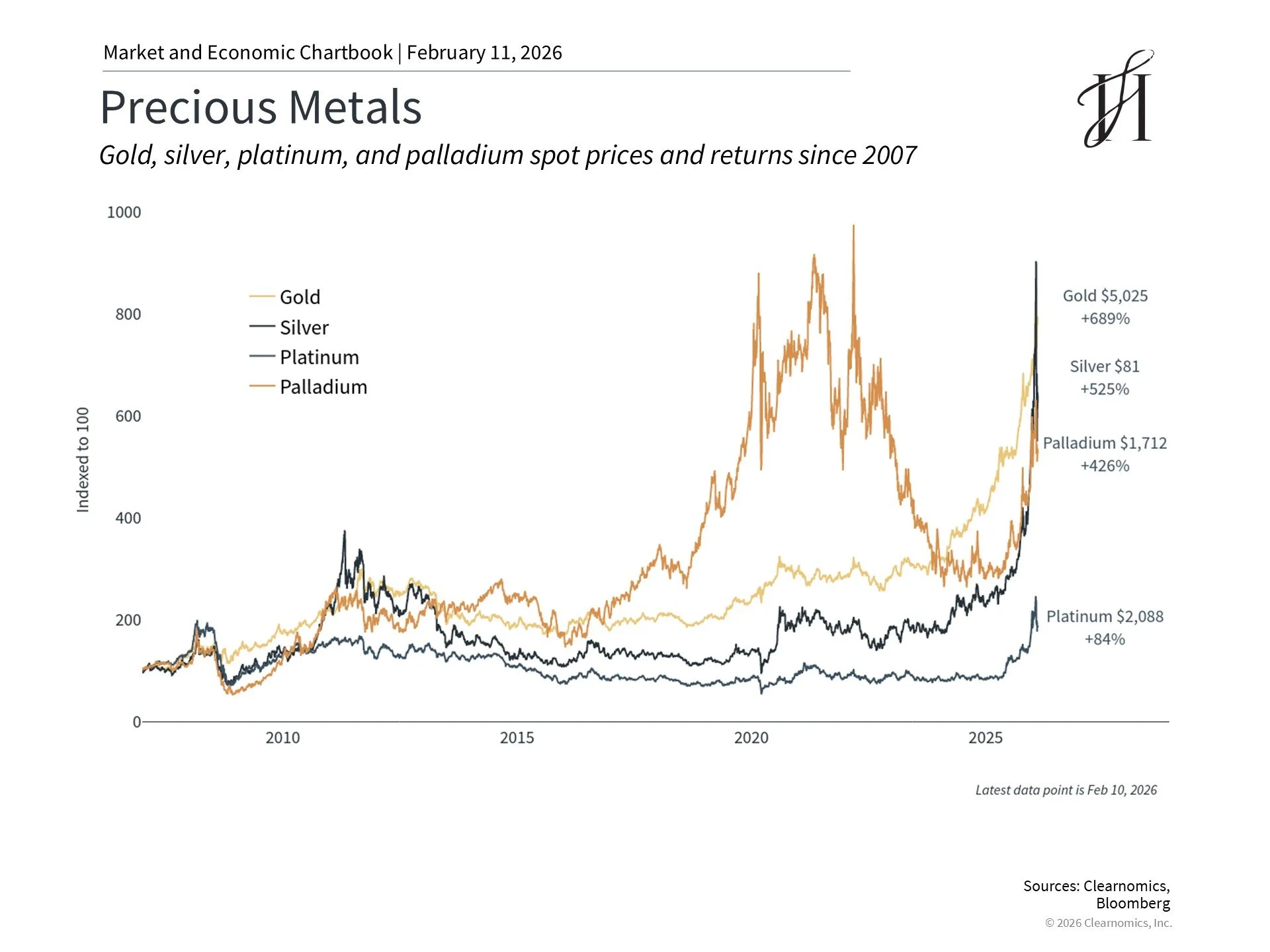
Precious metals were a major story this month.
Gold rallied aggressively, nearing 5,600 on an intra day basis. Silver climbed above 120 per ounce. Both then reversed sharply after news broke that Kevin Warsh may be nominated as the next Fed Chair when Jerome Powell’s term ends.
Why did that matter?
Because markets were trying to price in future interest rate policy. Some investors positioned for what is often called the “debasement trade,” meaning a weaker dollar, more inflation, and looser monetary policy.
When expectations shifted, gold and silver fell quickly.
This is a perfect example of why we treat precious metals as a complementary asset, not a core strategy. They can play a role. But they are volatile and policy sensitive.
Your long term plan cannot depend on predicting central bank leadership decisions.
Meanwhile, Corporate America Is Still Growing
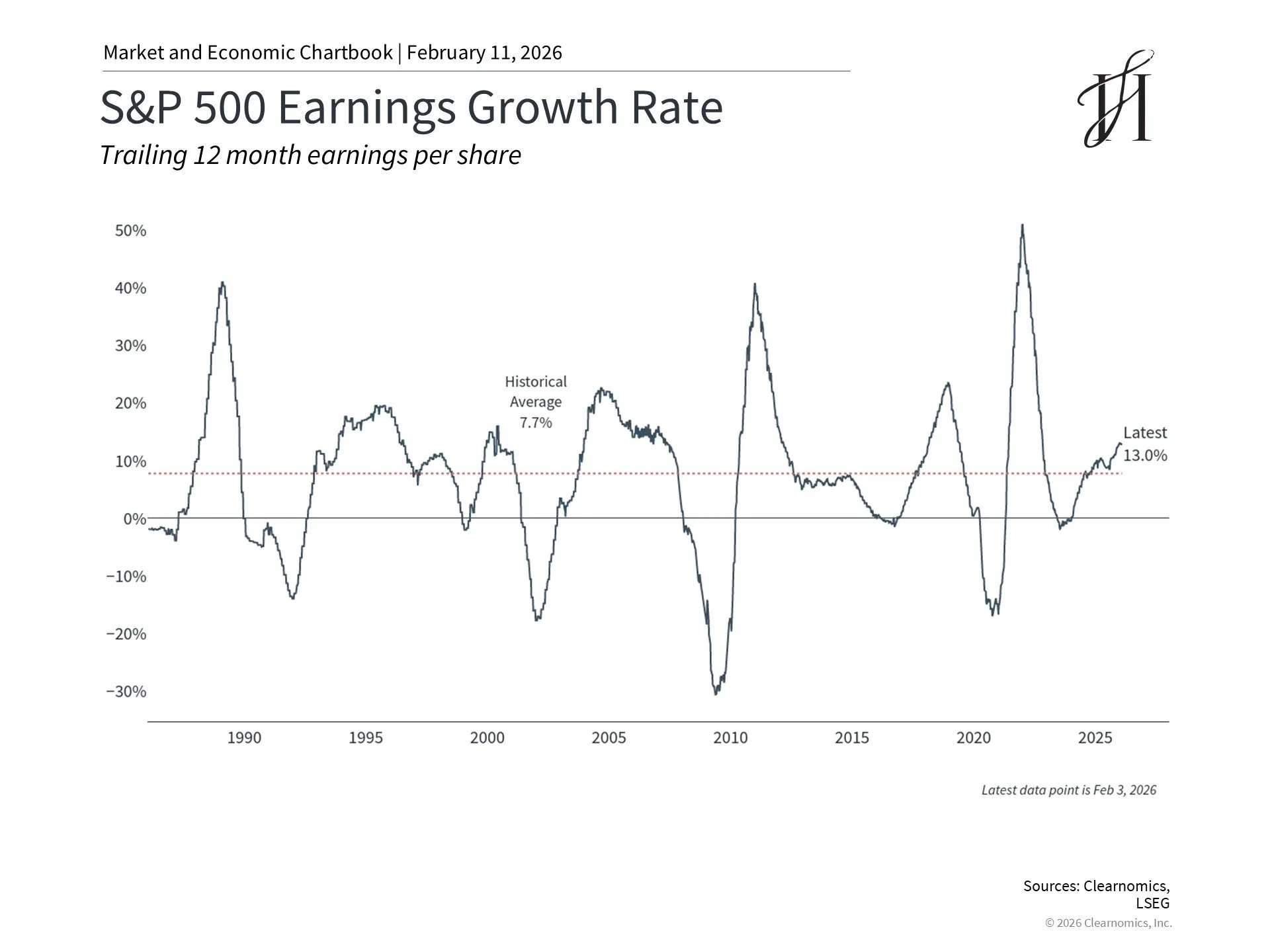
Underneath the noise, something far more important was happening.
Corporate earnings remained strong.
Roughly one third of S&P 500 companies have reported, and about 75% have exceeded expectations. If trends continue, earnings growth could reach nearly 12% for the quarter, marking the fifth consecutive quarter of double digit growth.
Yes, AI and technology stocks continue to attract attention. But growth is not limited to one sector. Broader parts of the economy are performing well.
This is what supports stock prices over time.
Not headlines. Not social media. Not short term fear.
Profits.
Even the Weather Made News
Severe winter weather impacted more than half the country, triggering emergency declarations and temporary economic disruptions.
But here is the key distinction: temporary disruption is not permanent damage.
When storms delay retail activity or construction, that activity typically shifts forward. It does not disappear.
Markets understand this. That is why weather rarely changes long term economic outcomes.
What This Means for You
No matter where you are in your financial journey, volatility can feel personal.
If you are building a business, leading a team, or navigating rapid growth, market swings can feel like one more variable in an already complex life.
If you are in your peak earning years, balancing family, career, and long term planning, uncertainty can create doubt about whether you are doing enough.
If you are approaching retirement or already there, volatility can feel even more heightened because your time horizon looks different.
The common thread is this: uncertainty triggers emotion.
And emotion is rarely a good investment strategy.
Markets do not move in straight lines. They respond to policy shifts, geopolitical events, economic data, and investor expectations. That is normal. It has always been normal.
What matters more than any single month is whether your financial plan is structured intentionally.
That means:
An asset allocation aligned with your time horizon and goals
Diversification across asset classes and regions
A tax strategy that supports long term efficiency
Sufficient liquidity so you are never forced to make reactive decisions
A clear understanding of why you own what you own
January was not a story about crisis. It was a reminder.
Headlines will come and go. Policy will change. Markets will fluctuate.
A disciplined plan, aligned with your long term goals, is what carries you forward.
The goal is not to eliminate volatility.
The goal is to design a life and a portfolio that can withstand it.
Securities and advisory services offered through LPL Financial, a Registered Investment Advisor, Member FINRA/SIPC.
Content in this material is for general information only and not intended to provide specific advice or recommendations for any individual. All performance referenced is historical and is no guarantee of future results. All indices are unmanaged and may not be invested into directly.
Copyright (c) 2026 Clearnomics, Inc. All rights reserved. The information contained herein has been obtained from sources believed to be reliable, but is not necessarily complete and its accuracy cannot be guaranteed. No representation or warranty, express or implied, is made as to the fairness, accuracy, completeness, or correctness of the information and opinions contained herein. The views and the other information provided are subject to change without notice. All reports posted on or via www.clearnomics.com or any affiliated websites, applications, or services are issued without regard to the specific investment objectives, financial situation, or particular needs of any specific recipient and are not to be construed as a solicitation or an offer to buy or sell any securities or related financial instruments. Past performance is not necessarily a guide to future results. Company fundamentals and earnings may be mentioned occasionally, but should not be construed as a recommendation to buy, sell, or hold the company's stock. Predictions, forecasts, and estimates for any and all markets should not be construed as recommendations to buy, sell, or hold any security--including mutual funds, futures contracts, and exchange traded funds, or any similar instruments. The text, images, and other materials contained or displayed in this report are proprietary to Clearnomics, Inc. and constitute valuable intellectual property. All unauthorized reproduction or other use of material from Clearnomics, Inc. shall be deemed willful infringement(s) of this copyright and other proprietary and intellectual property rights, including but not limited to, rights of privacy. Clearnomics, Inc. expressly reserves all rights in connection with its intellectual property, including without limitation the right to block the transfer of its products and services and/or to track usage thereof, through electronic tracking technology, and all other lawful means, now known or hereafter devised. Clearnomics, Inc. reserves the right, without further notice, to pursue to the fullest extent allowed by the law any and all criminal and civil remedies for the violation of its rights.