
Q3 2026 Market Recap: Higher Rates, Strong Earnings & What Investors Should Watch Next
If the third quarter proved anything, it's that markets can absorb a lot at once.
Interest rates climbed to levels not seen in decades. Oil prices moved sharply higher. The Federal Reserve raised rates for the first time in three years. Questions surrounding artificial intelligence continued. And with midterm elections approaching, another layer of uncertainty entered the picture.
Yet through all of it, markets remained remarkably resilient.
The S&P 500 returned 2.3% during the third quarter, including dividends, while the Nasdaq Composite gained 2.6%. The Dow Jones Industrial Average declined 2.3%. Even more notable, the S&P 500 and Nasdaq remained near record levels as the quarter came to a close.
And the story wasn't limited to large U.S. technology companies.
International markets, energy, commodities, and other areas of the market also contributed at different points throughout the quarter.
So, what should investors take away from the last three months?
Perhaps the biggest lesson is that markets don't need perfect conditions to make progress.
Here's what shaped the third quarter—and what we're watching as we head into the final months of 2026.
Interest Rates Moved Back Into the Spotlight
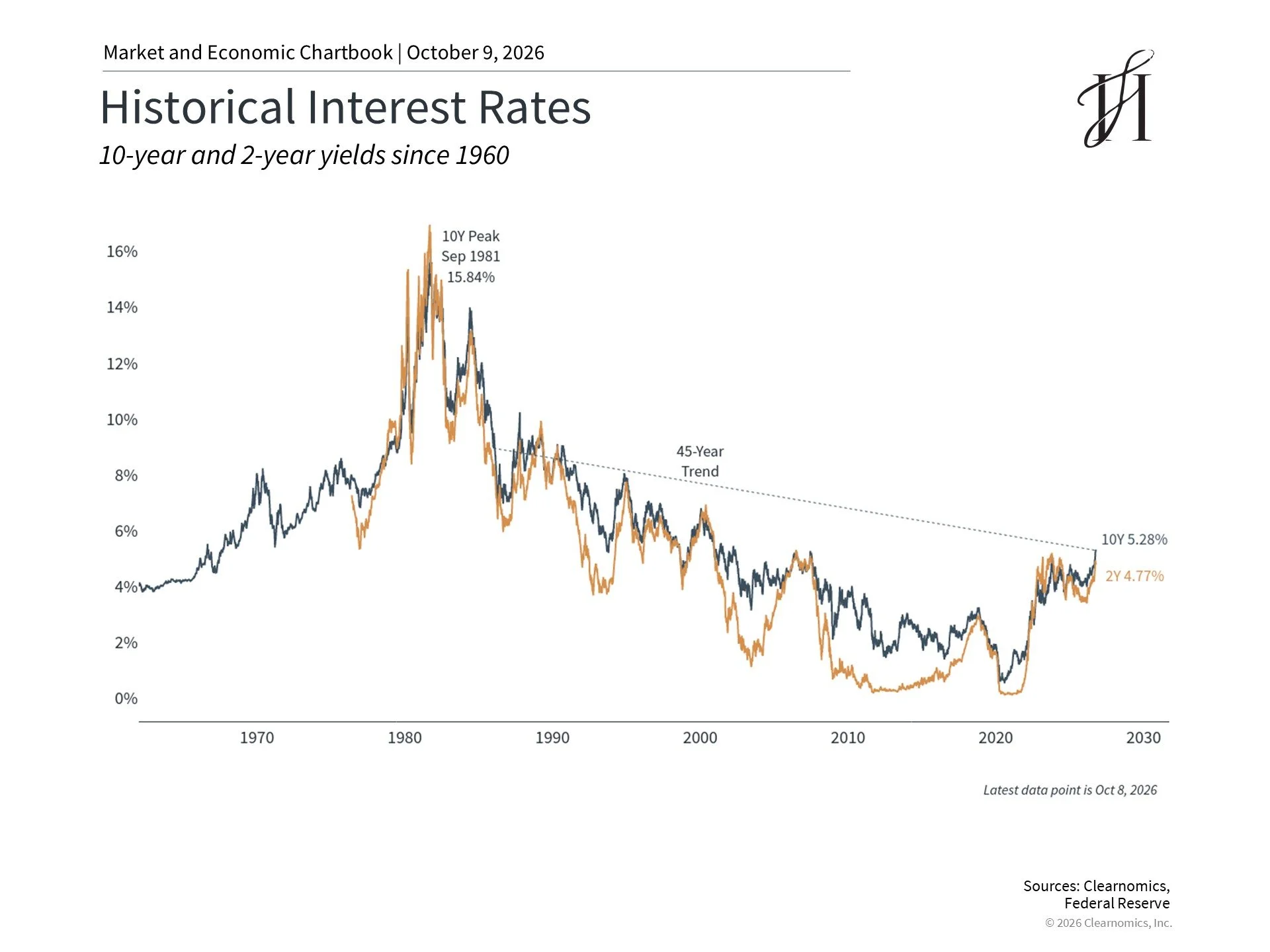
One of the biggest stories of the quarter happened outside of the stock market.
Interest rates moved sharply higher, with the 10-year Treasury yield reaching 5.29%—its highest level in roughly two decades.
For consumers, higher rates aren't exactly welcome news.
They can mean more expensive mortgages, auto loans, business financing, and other forms of borrowing. Mortgage rates moved back above 7% during the quarter, creating additional pressure in an already challenging housing market.
But for investors, there's another side to the story.
After years of extremely low interest rates, bonds are once again offering income levels that haven't been available for quite some time.
That doesn't mean rising rates are painless. Bond prices generally move in the opposite direction of yields, and the Bloomberg U.S. Aggregate Bond Index declined 3.5% during the quarter.
But higher yields can also improve the income potential of bonds going forward.
It's a good example of something we talk about often: market developments that create short-term challenges can also create longer-term opportunities.
The Federal Reserve Raised Rates Again
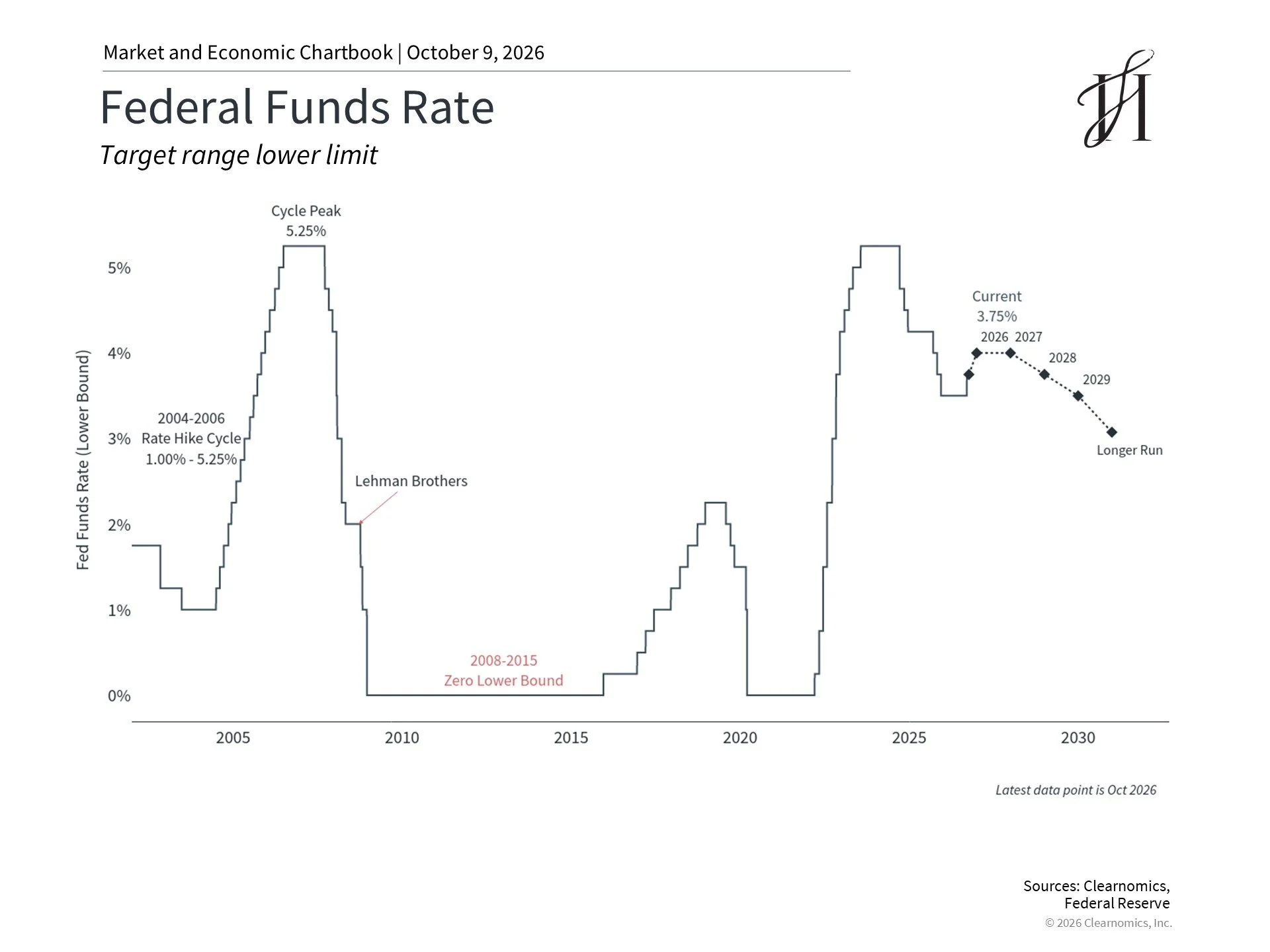
September brought another important development: the Federal Reserve raised its benchmark interest rate by a quarter percentage point to a range of 3.75% to 4.00%.
It was the Fed's first rate increase in three years.
Why raise rates now?
One reason is renewed inflation pressure—particularly from higher energy prices.
Oil climbed significantly during the quarter as conflict in the Middle East raised concerns about global supply. When energy becomes more expensive, those costs can eventually find their way into transportation, manufacturing, food, and other parts of the economy.
The Fed can't control the price of oil or resolve geopolitical conflicts. What it can do is use interest rates to try to prevent those price pressures from spreading more broadly throughout the economy.
For investors, it's another reminder that the path of interest rates rarely moves in a perfectly straight line.
After spending much of the last few years discussing when rates might come down, markets are once again adjusting to the possibility that rates could remain higher for longer.
That doesn't necessarily mean stocks can't perform.
In fact, the third quarter demonstrated exactly that: interest rates rose while major stock indices remained near record highs.
AI Is Still a Big Part of the Story—But It's Evolving
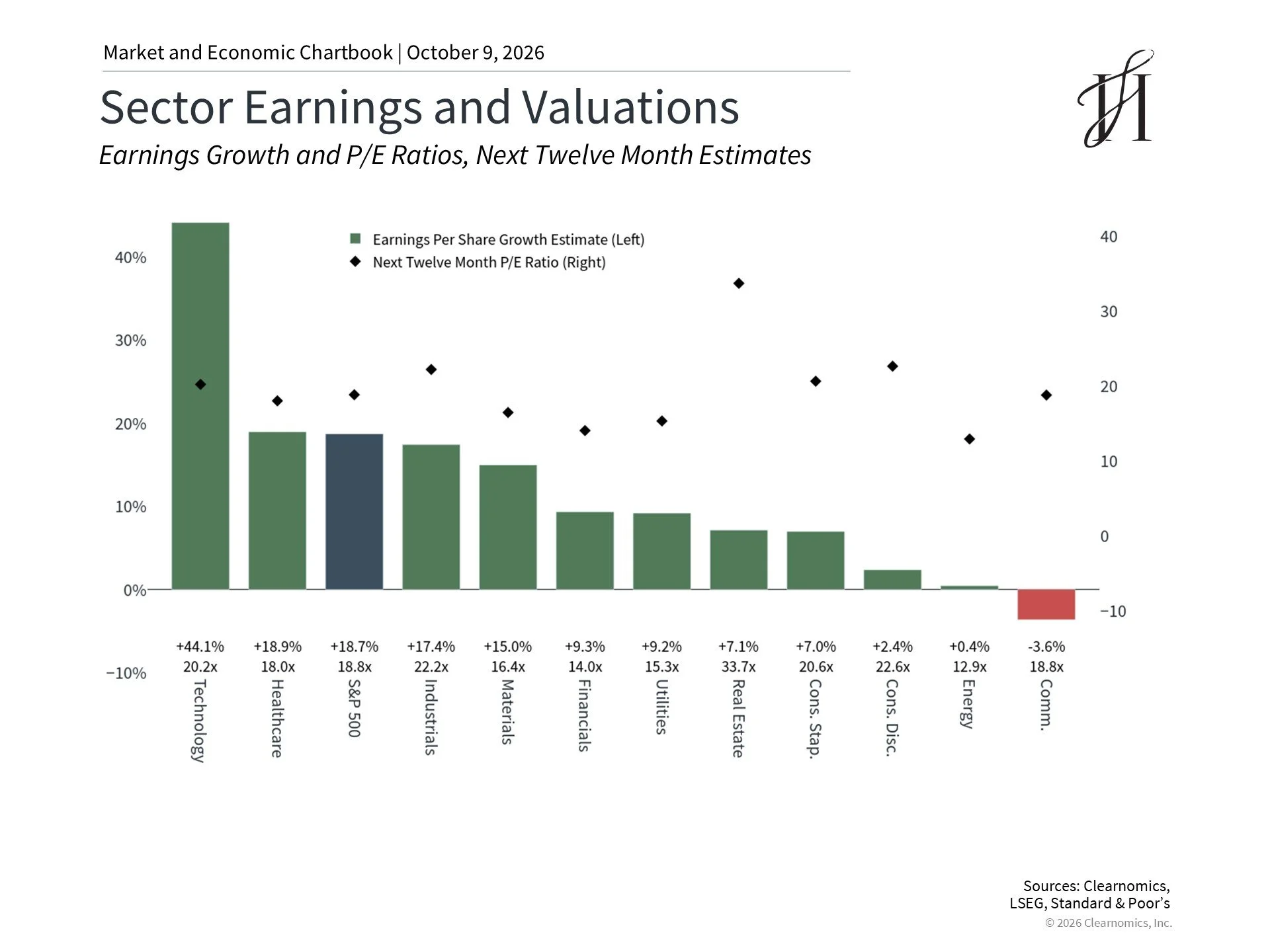
Artificial intelligence continued to play an important role in markets during the third quarter.
But the conversation is becoming bigger than just a handful of technology companies.
The enormous buildout of AI infrastructure requires data centers, semiconductors, electricity, industrial equipment, cooling systems, and raw materials.
That means AI investment is beginning to touch areas of the economy that may not immediately come to mind when we think about “technology.”
Copper is one example.
Demand for the metal has been supported in part by the infrastructure needed to expand data centers and electrical systems, while supply constraints have added additional pressure.
Energy has also benefited from its own set of dynamics, including higher oil prices, and became one of the strongest-performing areas of the market this year.
For investors, this broader participation matters.
Markets are healthier when returns aren't dependent entirely on a small group of companies.
And it reinforces why diversification remains important—even when one particular investment theme seems to dominate the headlines.
The Economy Has Remained Resilient
Underneath all of the market headlines, the economy continued to show signs of strength.
Second-quarter economic growth was revised to an annualized rate of 2.2%, supported in large part by continued consumer spending.
Corporate earnings have also remained strong.
That matters because over long periods of time, stock prices are ultimately supported by the ability of companies to grow their businesses and generate profits.
It's easy to become focused on the daily headlines surrounding the Fed, interest rates, oil prices, or politics.
But markets are constantly weighing those headlines against something more fundamental:
How are businesses actually doing?
So far, continued economic growth and corporate profitability have helped provide support for stocks despite a more complicated backdrop.
Election Season Adds Another Layer of Uncertainty
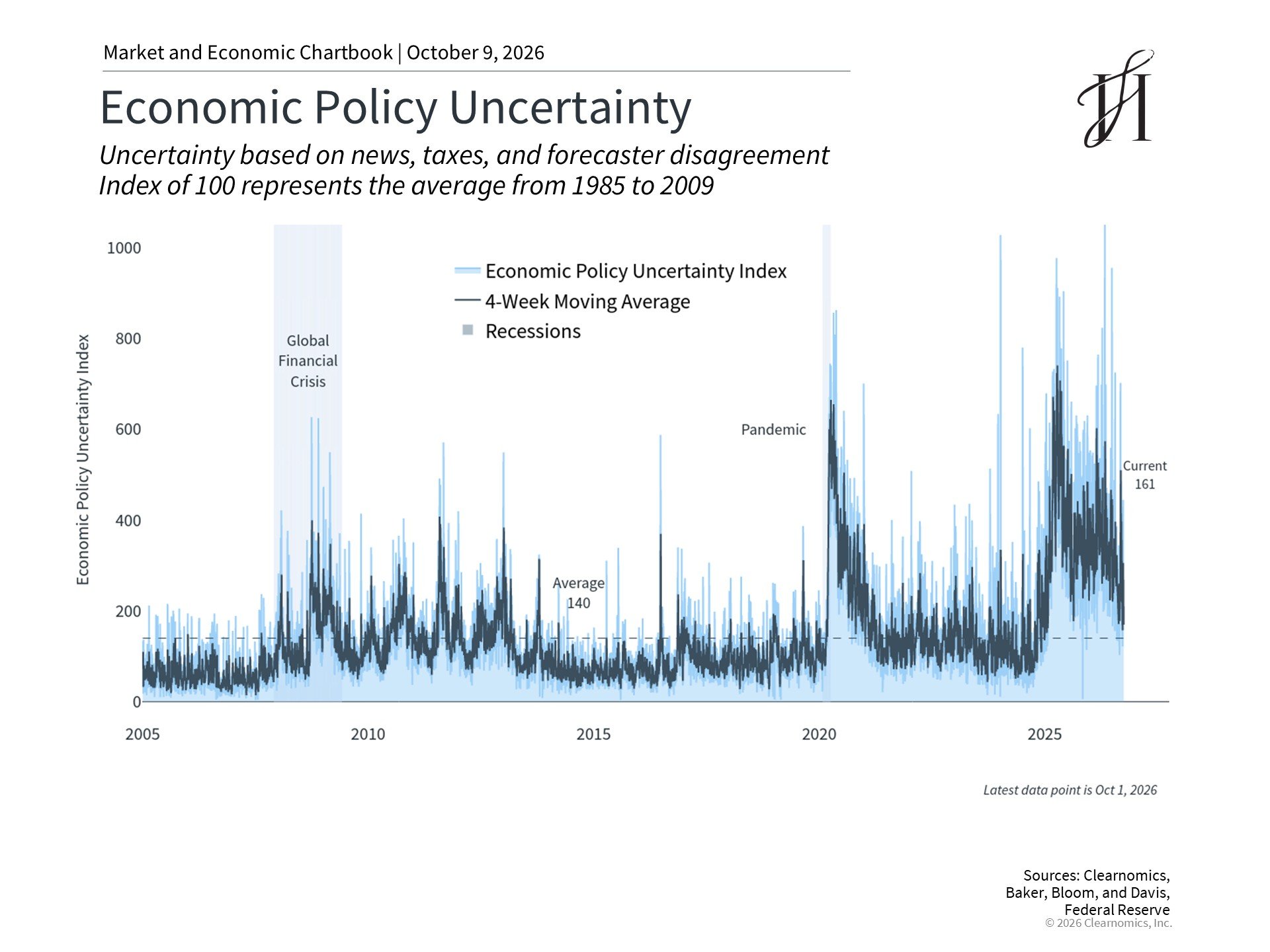
As we enter the fourth quarter, the November midterm elections will likely become an increasingly prominent part of the news cycle.
Taxes. Government spending. Tariffs. The federal debt. Healthcare. Regulation.
All of these issues can have real financial and economic implications.
But there's an important distinction between paying attention to policy and allowing political predictions to dictate an investment strategy.
Markets have historically operated through many different combinations of presidents, political parties, and congressional majorities.
And while elections can create short-term uncertainty, they're only one of many forces influencing markets at any given time.
For investors, the more useful question isn't necessarily:
“What will the market do after the election?”
It's:
“Is my financial plan prepared for different outcomes?”
We'll be talking more about elections and investing as November approaches, but the guiding principle remains the same: a long-term financial strategy shouldn't depend on correctly predicting one election.
What We're Watching in Q4
There are plenty of questions still on the table as we enter the final quarter of the year.
Will higher energy prices continue to put pressure on inflation?
Will the Federal Reserve raise rates again?
Can corporate earnings remain strong?
Will AI investment continue spreading into other areas of the economy?
And how will markets respond as the midterm elections approach?
We don't know the answers yet.
And that's exactly why financial planning shouldn't depend on knowing them.
The third quarter gave investors a useful reminder that markets can continue moving forward even when the backdrop feels complicated.
Stocks remained resilient. Higher bond yields created new income opportunities. Corporate earnings continued to provide support. And multiple areas of the market contributed along the way.
Keeping the Quarter in Perspective
Markets will always give us something to worry about.
This quarter, it was interest rates, oil prices, geopolitics, AI, inflation, and the Fed.
Next quarter, the list may look completely different.
The goal isn't to build a portfolio that avoids uncertainty. That's impossible.
The goal is to build a financial plan and investment strategy capable of navigating through it.
That means maintaining appropriate diversification, understanding the role each investment plays, and making decisions based on your goals rather than the headline of the day.
As we head into the final quarter of 2026, there are certainly risks worth watching.
But there are opportunities, too.
And sometimes the most important thing an investor can do is remember that both can exist at the same time.
At Infinite Heights, we'll continue watching the markets, the economy, and the policy landscape while keeping our focus where we believe it belongs: on helping our clients make thoughtful decisions around the life they're building and the goals they're working toward.
Securities and advisory services offered through LPL Financial, a Registered Investment Advisor, Member FINRA/SIPC.
Copyright (c) 2026 Clearnomics, Inc. All rights reserved. The information contained herein has been obtained from sources believed to be reliable, but is not necessarily complete and its accuracy cannot be guaranteed. No representation or warranty, express or implied, is made as to the fairness, accuracy, completeness, or correctness of the information and opinions contained herein. The views and the other information provided are subject to change without notice. All reports posted on or via www.clearnomics.com or any affiliated websites, applications, or services are issued without regard to the specific investment objectives, financial situation, or particular needs of any specific recipient and are not to be construed as a solicitation or an offer to buy or sell any securities or related financial instruments. Past performance is not necessarily a guide to future results. Company fundamentals and earnings may be mentioned occasionally, but should not be construed as a recommendation to buy, sell, or hold the company's stock. Predictions, forecasts, and estimates for any and all markets should not be construed as recommendations to buy, sell, or hold any security--including mutual funds, futures contracts, and exchange traded funds, or any similar instruments. The text, images, and other materials contained or displayed in this report are proprietary to Clearnomics, Inc. and constitute valuable intellectual property. All unauthorized reproduction or other use of material from Clearnomics, Inc. shall be deemed willful infringement(s) of this copyright and other proprietary and intellectual property rights, including but not limited to, rights of privacy. Clearnomics, Inc. expressly reserves all rights in connection with its intellectual property, including without limitation the right to block the transfer of its products and services and/or to track usage thereof, through electronic tracking technology, and all other lawful means, now known or hereafter devised. Clearnomics, Inc. reserves the right, without further notice, to pursue to the fullest extent allowed by the law any and all criminal and civil remedies for the violation of its rights.