
Beyond the Headlines: Fed Rate Hikes and Long-Term Portfolios
Just as there is no quick cure for the common cold, there is no single tool the Federal Reserve can use to solve every challenge facing the economy. Monetary policy can help influence inflation, employment, and overall economic activity, but the Fed does not directly control the economy. More often, it is responding to the conditions already unfolding around it.
Right now, the primary challenge is persistent inflation, driven in large part by higher oil prices as the war in Iran continues, the Strait of Hormuz remains closed, and geopolitical tensions disrupt global energy markets. These are not problems the Fed can solve by changing interest rates. What it can do is try to prevent higher energy costs from spreading more broadly throughout the economy and becoming embedded in the prices consumers and businesses pay.
For long-term investors, that distinction matters. Rather than viewing every Fed decision as a signal to make changes, it can be more helpful to understand what the Fed is responding to and what that may mean for the broader economic environment.
The Fed’s latest rate hike was widely anticipated
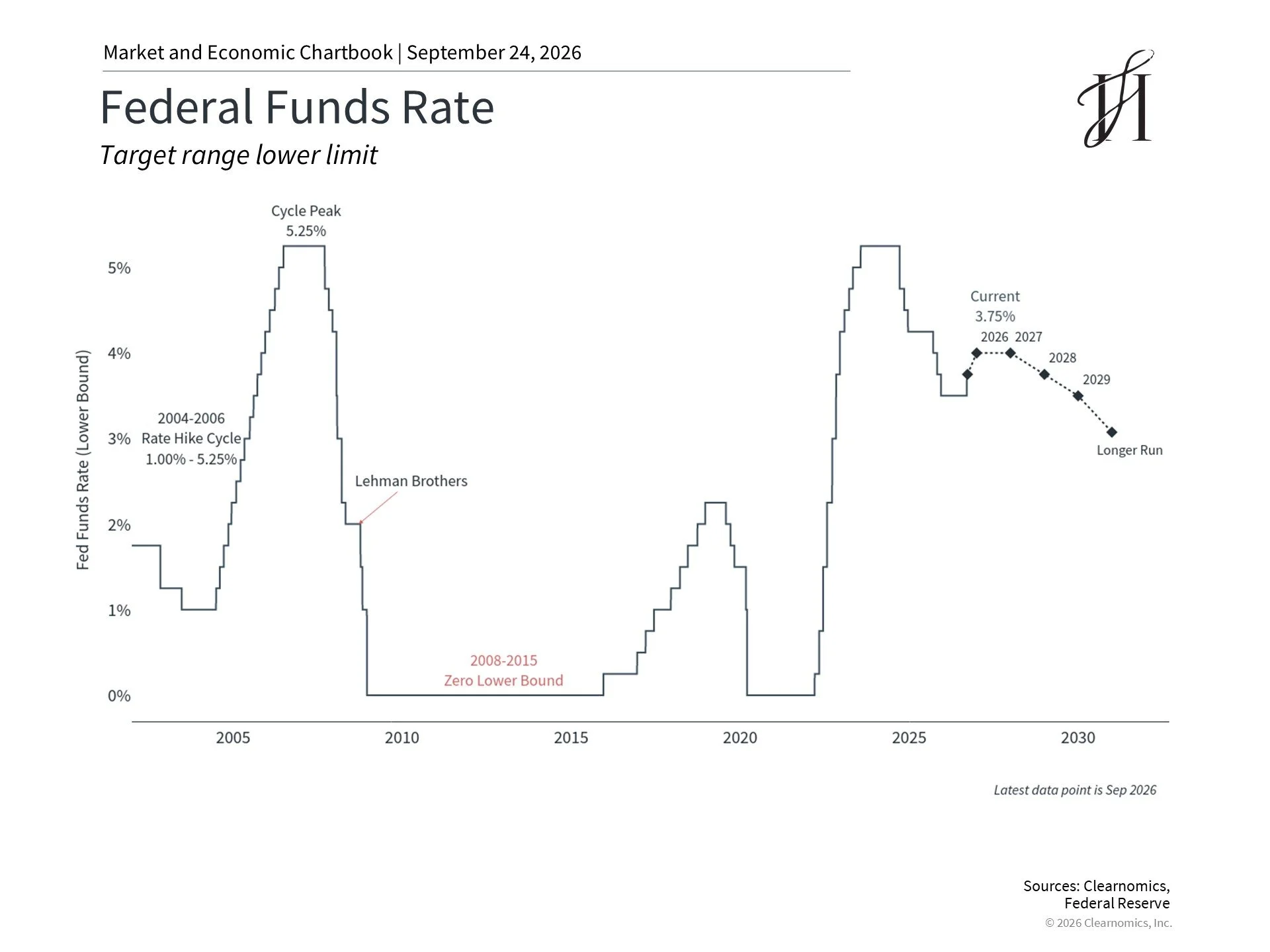
At its September meeting, the Federal Reserve raised its policy rate by 0.25%, bringing the target range to 3.75% to 4.00%. This marked the first rate hike in three years, following a series of cuts between September 2024 and December 2025.
Because markets had largely anticipated the move, the announcement did not come as a major surprise. There was some short-term volatility following the decision, but overall, investors took the increase in stride.
What makes this rate hike somewhat different is the source of inflation. The Fed is responding primarily to higher energy prices, with oil still trading around $100 per barrel. Economists often describe this as “cost-push inflation,” where rising prices are caused by supply disruptions rather than excessive consumer demand.
That is different from “demand-pull inflation,” which occurs when strong consumer spending and an overheating economy push prices higher. In 2022, the economy experienced elements of both. Low interest rates and government stimulus contributed to strong demand, while pandemic-related supply disruptions and Russia’s invasion of Ukraine created additional pressure on prices.
Supply-driven inflation is often viewed as more temporary because supply disruptions can eventually ease. Oil prices did decline following the 2022 inflation surge, although geopolitical developments this year have once again placed upward pressure on energy costs.
The Fed’s communication strategy is also evolving. In recent years, policymakers relied heavily on “forward guidance,” giving markets a clearer idea of where interest rates might be headed. New Fed Chair Kevin Warsh has taken a different approach, choosing to place more emphasis on incoming economic data rather than signaling future policy decisions in advance.
As a result, measures of inflation, employment, and economic growth may become even more important for investors to watch. While inflation remains elevated, unemployment continues to be historically low and economic growth has remained relatively steady.
Rate hikes are a normal part of the economic cycle
The Fed’s quarter-point increase reflects the balancing act policymakers currently face. Projections from other Fed officials suggest there could be another rate hike later this year, followed by a pause through 2027, with rates potentially declining gradually after that.
Those projections, however, are not guarantees. Interest-rate expectations can change quickly as new economic data becomes available.
It is understandable that investors may view higher interest rates as negative for the market, but the relationship is not always that simple. What matters is why rates are rising.
A healthy, growing economy can support strong corporate earnings and rising stock prices even while the Fed is increasing interest rates to keep inflation under control. Over the past six months, the S&P 500, Dow Jones Industrial Average, and Nasdaq have all moved toward new highs, supported by corporate earnings and continued investment in areas such as artificial intelligence and data center infrastructure, even as interest rates have remained elevated.
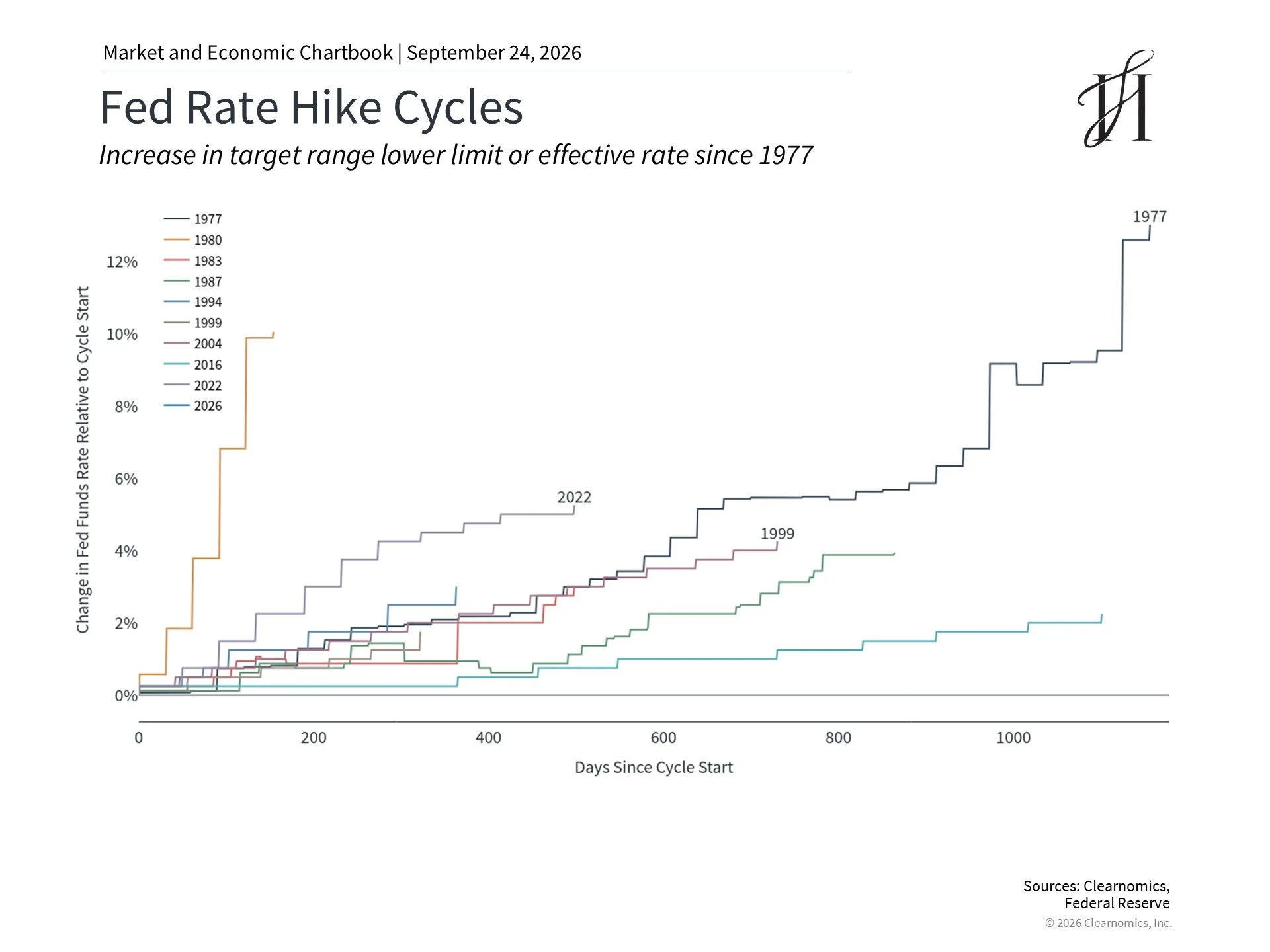
It is also helpful to remember that the Fed is not constantly fine-tuning the economy from the driver’s seat. More often, policymakers are reacting to changing economic conditions. Looking at previous interest-rate cycles shows that rate hikes have occurred in many different economic environments and are a normal part of the broader business cycle.
Long-term investing remains one of the most effective ways to address inflation
Ultimately, investors pay attention to Fed policy because of the potential impact on their portfolios and financial plans. But interest rates are only one part of a much larger picture.
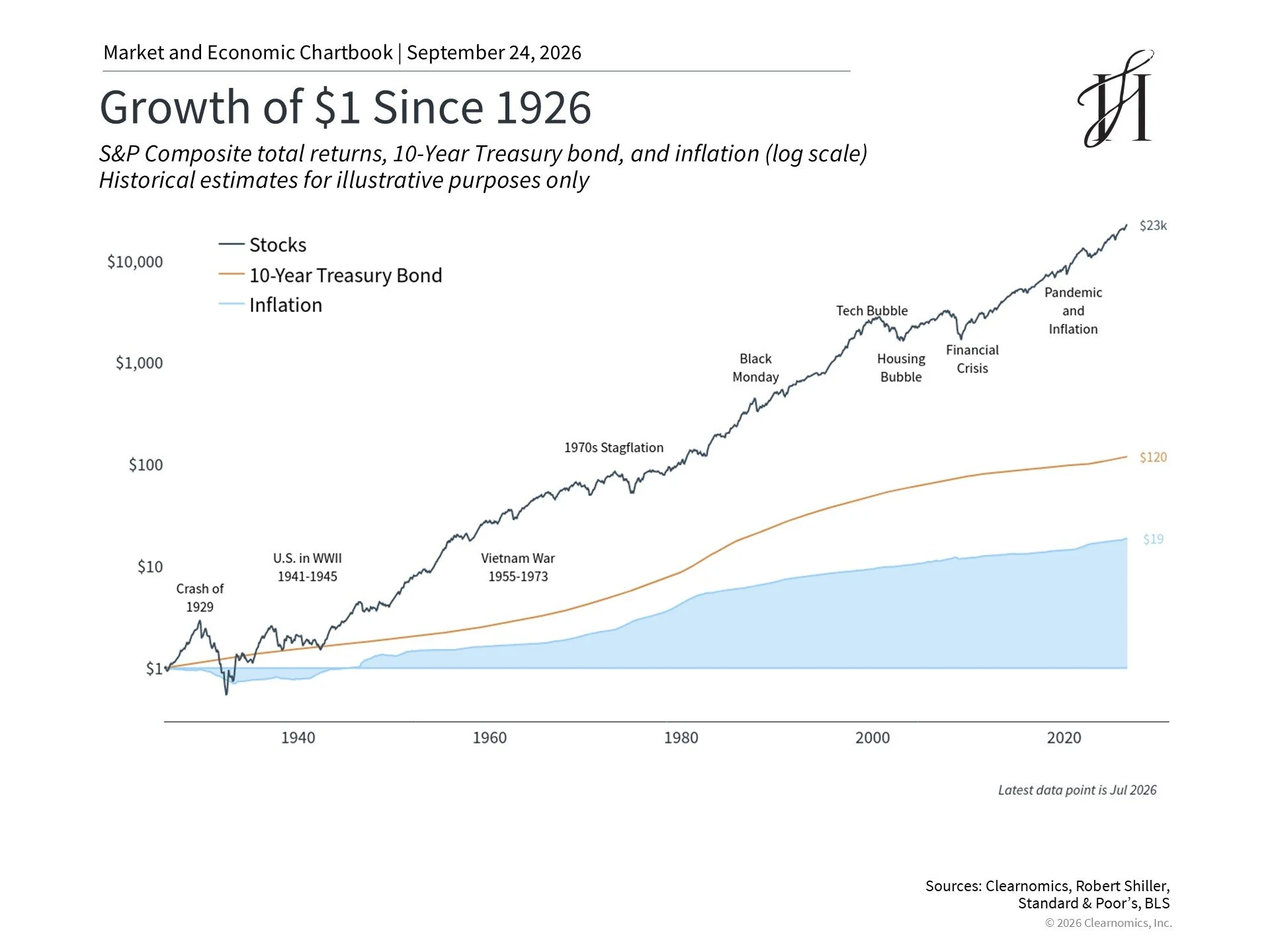
Over the past century, investors have navigated countless rate changes, recessions, geopolitical conflicts, economic shocks, and periods of uncertainty. During that same period, inflation dramatically increased the cost of goods and services. What cost $1 in 1926 would cost roughly $19 today.
Despite that increase, both stocks and bonds have historically outpaced inflation over long periods of time. For investors who remained disciplined and stayed invested, markets have continued to provide opportunities to generate income, preserve purchasing power, and build wealth.
That does not mean markets move in a straight line. Periods of volatility and uncertainty are inevitable. But trying to predict every Fed decision or adjust a portfolio around short-term headlines can create more challenges than opportunities.
A well-designed portfolio should instead reflect your goals, time horizon, cash flow needs, and overall financial plan.
The bottom line? The Fed’s latest rate hike is largely a response to inflation driven by higher energy prices and geopolitical uncertainty. Rather than reacting to each interest-rate decision, long-term investors are generally better served by staying focused on their goals, maintaining an appropriately diversified portfolio, and allowing their financial plan to guide their decisions.
At Infinite Heights, we believe financial planning is about creating confidence through every market environment, not just the easy ones. Markets will continue to experience periods of volatility, economic conditions will change, and headlines will always compete for our attention.
Your financial plan, however, should remain centered on something far more important: the life you are building and the goals you are working toward.
If you have questions about how recent market activity may affect your financial plan, we are always happy to have that conversation.
Securities and advisory services offered through LPL Financial, a Registered Investment Advisor, Member FINRA/SIPC.
Copyright (c) 2026 Clearnomics, Inc. All rights reserved. The information contained herein has been obtained from sources believed to be reliable, but is not necessarily complete and its accuracy cannot be guaranteed. No representation or warranty, express or implied, is made as to the fairness, accuracy, completeness, or correctness of the information and opinions contained herein. The views and the other information provided are subject to change without notice. All reports posted on or via www.clearnomics.com or any affiliated websites, applications, or services are issued without regard to the specific investment objectives, financial situation, or particular needs of any specific recipient and are not to be construed as a solicitation or an offer to buy or sell any securities or related financial instruments. Past performance is not necessarily a guide to future results. Company fundamentals and earnings may be mentioned occasionally, but should not be construed as a recommendation to buy, sell, or hold the company's stock. Predictions, forecasts, and estimates for any and all markets should not be construed as recommendations to buy, sell, or hold any security--including mutual funds, futures contracts, and exchange traded funds, or any similar instruments. The text, images, and other materials contained or displayed in this report are proprietary to Clearnomics, Inc. and constitute valuable intellectual property. All unauthorized reproduction or other use of material from Clearnomics, Inc. shall be deemed willful infringement(s) of this copyright and other proprietary and intellectual property rights, including but not limited to, rights of privacy. Clearnomics, Inc. expressly reserves all rights in connection with its intellectual property, including without limitation the right to block the transfer of its products and services and/or to track usage thereof, through electronic tracking technology, and all other lawful means, now known or hereafter devised. Clearnomics, Inc. reserves the right, without further notice, to pursue to the fullest extent allowed by the law any and all criminal and civil remedies for the violation of its rights.