
If there's one thing May reminded us, it's that markets rarely wait for the all-clear.
This was another month where the headlines and the market seemed to tell two very different stories.
Inflation remained stubbornly higher than many economists expected. Interest rates climbed to levels we haven't seen in years. There was a leadership transition at the Federal Reserve. Geopolitical tensions remained unresolved. Yet despite all of that, the stock market continued moving higher.
The S&P 500 gained 5.1% in May and crossed above 7,500 for the first time. The Nasdaq rose 8.4%, the Dow added 2.8%, and all three major U.S. indexes finished the month at new all-time highs. International markets also participated in the rally, with emerging markets posting particularly strong gains.
For many investors, that can feel confusing.
When the news cycle feels uncertain, we naturally expect markets to reflect that uncertainty. Yet markets often have a way of looking beyond today's headlines and focusing on what may come next.
That's one of the reasons long-term investing can feel so uncomfortable at times. The moments when confidence is highest are often not the moments that create the best opportunities. Likewise, periods of uncertainty don't always result in poor market performance.
The Interest Rate Story Beneath the Headlines
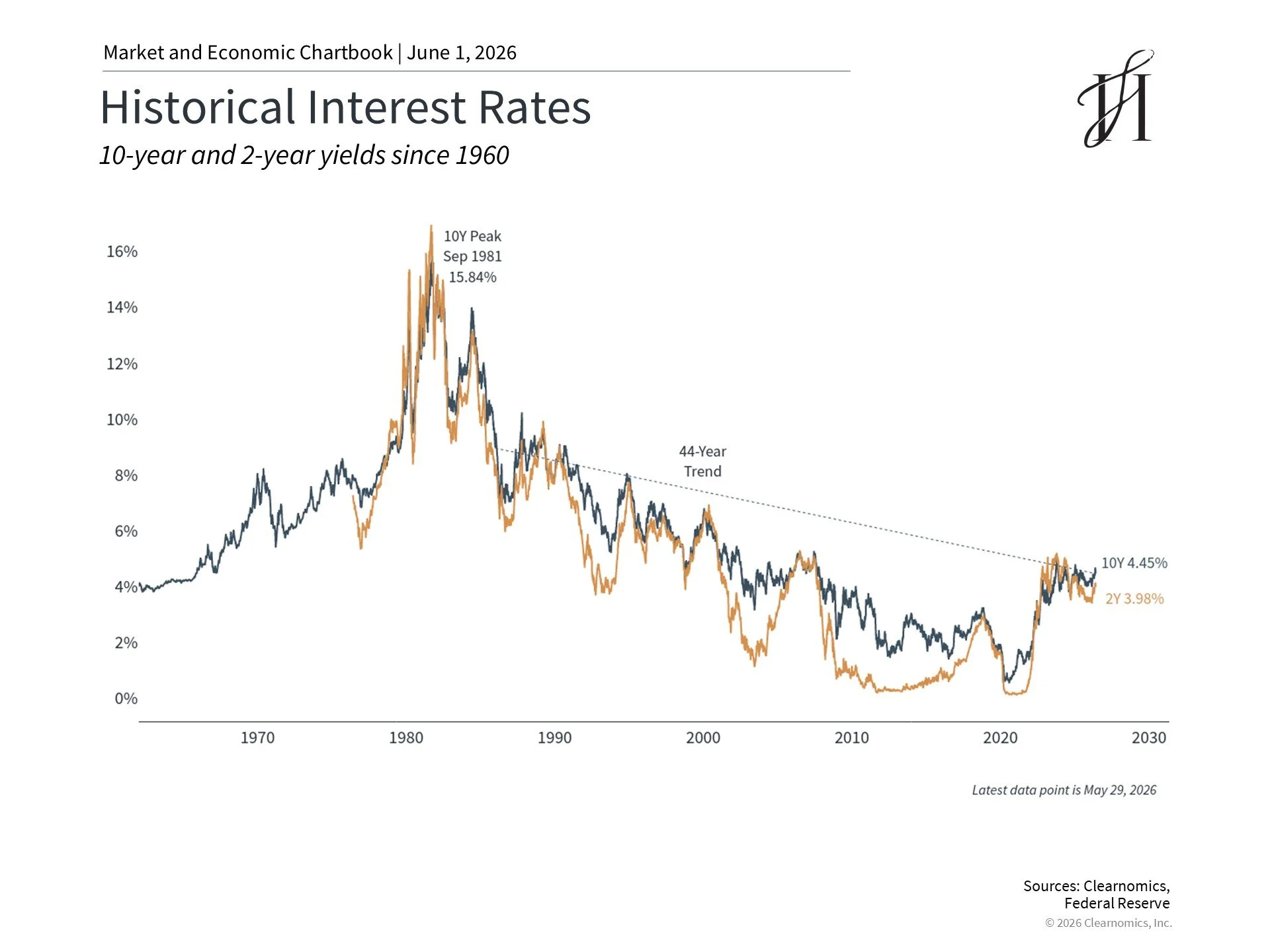
One of the most important developments during May wasn't in the stock market at all—it was happening in the bond market.
The 30-year Treasury yield briefly reached its highest level in nearly two decades before moderating later in the month. The 10-year Treasury yield also moved higher as investors adjusted expectations for future Federal Reserve policy. Rather than anticipating interest rate cuts, markets are now pricing in the possibility that rates may remain elevated for longer than previously expected.
Why does this matter?
Because interest rates influence nearly every corner of the economy.
For consumers, higher rates can impact mortgage costs, car loans, and borrowing expenses. For businesses, they affect the cost of financing growth, expansion, and operations. For investors, interest rates influence how assets are valued and how capital flows through markets.
At the same time, higher rates aren't entirely negative.
For the first time in many years, bonds are once again providing meaningful levels of income. While rising rates can create short-term pressure on bond prices, they can also improve future income opportunities for diversified portfolios.
As is often the case in investing, there are multiple sides to every story.
Inflation Continues to Be a Key Focus
A significant reason rates moved higher during May was renewed concern around inflation.
Both consumer and producer inflation reports came in above expectations, largely driven by higher energy prices. While oil prices declined later in the month, the lingering effects of energy costs continue to work their way through the broader economy.
Inflation can sometimes feel like an abstract economic concept until it shows up in everyday life.
It's the higher cost of filling up your gas tank. It's increased transportation expenses. It's businesses paying more for energy and materials, which can eventually impact the prices consumers see on store shelves.
The challenge policymakers face is that inflation and economic growth often pull in opposite directions.
Lower interest rates can help stimulate growth and hiring. Higher interest rates can help cool inflation. Finding the right balance between those objectives is rarely straightforward.
And that's exactly the environment policymakers find themselves navigating today.
A New Federal Reserve Chair Takes the Helm
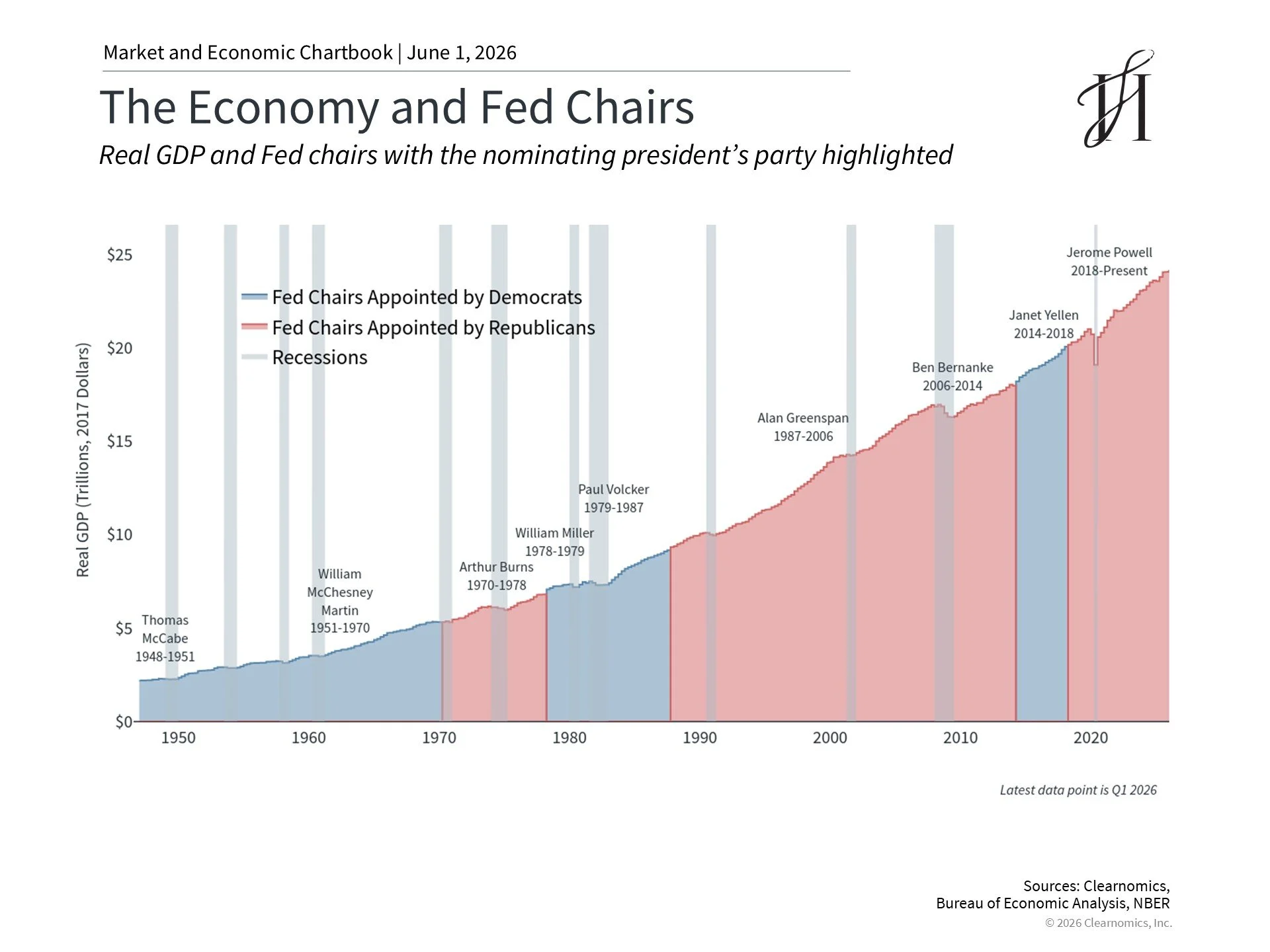
May also marked a notable transition at the Federal Reserve as Kevin Warsh officially became the new Fed Chair, succeeding Jerome Powell.
Any leadership change at the Fed naturally attracts attention because monetary policy has such a significant influence on financial markets and the broader economy. Investors often wonder whether a new chair will bring meaningful changes to how the Fed approaches inflation, employment, and interest rates.
While those questions are understandable, history provides some useful perspective.
Markets have successfully navigated many different Federal Reserve leaders, economic cycles, and policy environments over the decades. While changes in leadership can create short-term uncertainty, they rarely alter the long-term drivers of wealth creation.
Innovation continues. Businesses adapt. Productivity grows. Companies generate earnings. Consumers spend. Entrepreneurs build.
Those forces tend to matter far more over the long run than any single policy decision.
New Market Highs Are More Normal Than They Feel
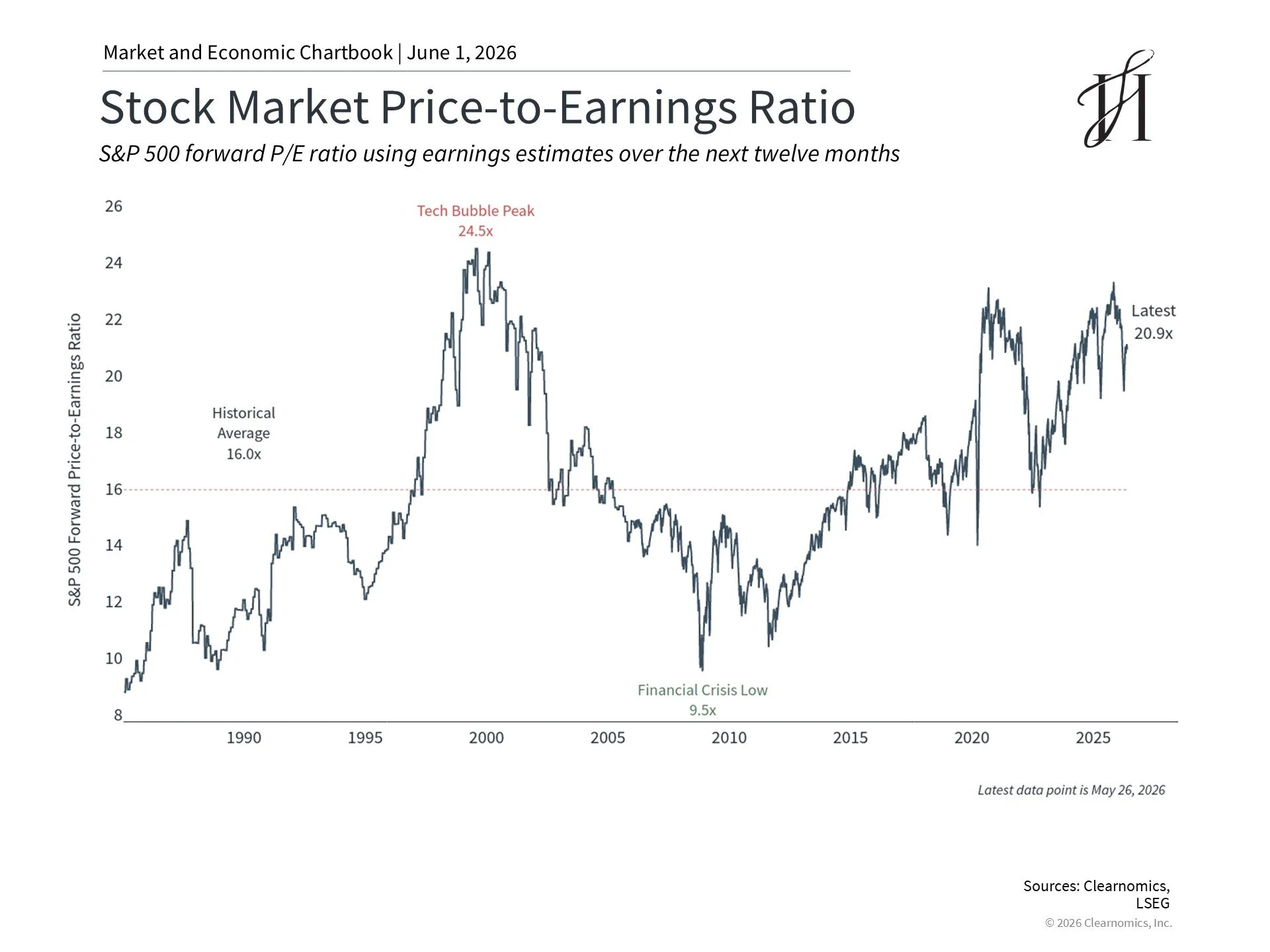
One statistic that caught my attention this month was that the S&P 500 recorded its 22nd all-time high of the year by the end of May.
When investors hear "all-time high," it can sometimes feel like a warning sign.
But historically, that's not necessarily the case.
Strong markets spend a surprising amount of time making new highs. In fact, because markets tend to trend upward over long periods of time, new highs are often a normal feature of healthy bull markets rather than a reason for concern.
What's more important is understanding what's supporting those gains.
Corporate earnings have remained strong, and companies continue to demonstrate resilience despite the challenges posed by inflation, interest rates, and geopolitical uncertainty. While valuations remain elevated compared to long-term averages, earnings growth has helped support much of the market's recent strength.
What We're Paying Attention To
As we move into June, several themes remain worth watching.
The path of inflation remains uncertain. Interest rate expectations continue to evolve. The global geopolitical landscape remains fluid. And markets will continue to react as new information emerges.
But perhaps the most important lesson from May isn't about inflation, interest rates, or Federal Reserve leadership.
It's about perspective.
The market continued to advance despite a long list of reasons investors could have chosen to stay on the sidelines.
That's often how investing works.
The future is rarely clear in real time. There will always be another headline, another concern, another reason to wait for more certainty. Yet history consistently shows that long-term success is less about predicting every twist and turn and more about staying disciplined through changing market environments.
At Infinite Heights, we believe financial planning is ultimately about helping you keep the bigger picture in focus. Markets will have strong months and difficult months. Economic conditions will evolve. Headlines will change.
Your long-term goals, however, deserve a strategy that isn't built around reacting to every headline, but around supporting the life you're building over time.
If you have questions about how current market conditions relate to your financial plan, we're always happy to have that conversation.
Securities and advisory services offered through LPL Financial, a Registered Investment Advisor, Member FINRA/SIPC.
Copyright (c) 2026 Clearnomics, Inc. All rights reserved. The information contained herein has been obtained from sources believed to be reliable, but is not necessarily complete and its accuracy cannot be guaranteed. No representation or warranty, express or implied, is made as to the fairness, accuracy, completeness, or correctness of the information and opinions contained herein. The views and the other information provided are subject to change without notice. All reports posted on or via www.clearnomics.com or any affiliated websites, applications, or services are issued without regard to the specific investment objectives, financial situation, or particular needs of any specific recipient and are not to be construed as a solicitation or an offer to buy or sell any securities or related financial instruments. Past performance is not necessarily a guide to future results. Company fundamentals and earnings may be mentioned occasionally, but should not be construed as a recommendation to buy, sell, or hold the company's stock. Predictions, forecasts, and estimates for any and all markets should not be construed as recommendations to buy, sell, or hold any security--including mutual funds, futures contracts, and exchange traded funds, or any similar instruments. The text, images, and other materials contained or displayed in this report are proprietary to Clearnomics, Inc. and constitute valuable intellectual property. All unauthorized reproduction or other use of material from Clearnomics, Inc. shall be deemed willful infringement(s) of this copyright and other proprietary and intellectual property rights, including but not limited to, rights of privacy. Clearnomics, Inc. expressly reserves all rights in connection with its intellectual property, including without limitation the right to block the transfer of its products and services and/or to track usage thereof, through electronic tracking technology, and all other lawful means, now known or hereafter devised. Clearnomics, Inc. reserves the right, without further notice, to pursue to the fullest extent allowed by the law any and all criminal and civil remedies for the violation of its rights.